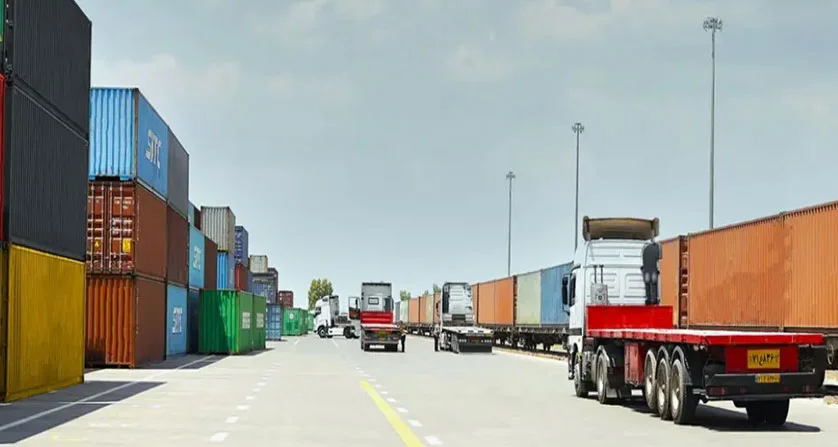
Container Transport from Bandar Abbas to Tehran: Rail and Road Freight Guide
Container transport from Bandar Abbas to Tehran is a key domestic logistics route in Iran, linking the country's southern ports with the capital's industrial, commercial, and consumer markets. A substantial volume of imported cargo arriving at Shahid Rajaee Port is transported onward to Tehran and surrounding areas by road or rail. The choice of transport mode affects not only costs and delivery times but also customs clearance, cargo storage, empty container returns, and importers' inventory management.
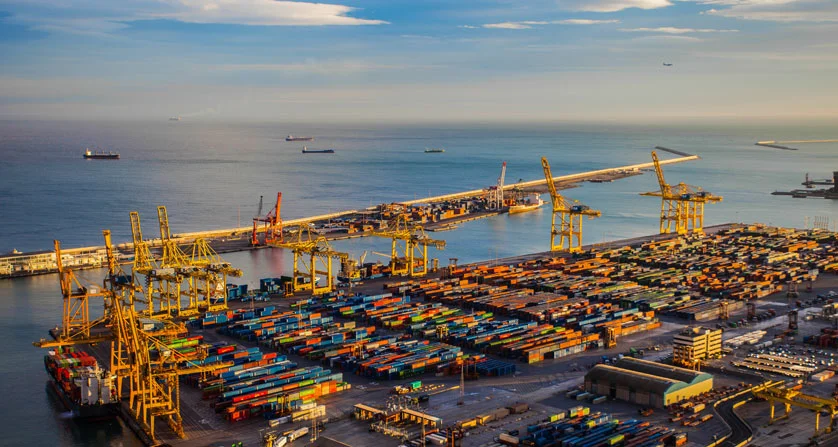
Shahid Rajaee Port in Bandar Abbas is Iran's principal container handling hub. According to statistics published by the Ports and Maritime Organization, the port handled more than 2.423 million TEUs in container loading and unloading operations in the Iranian calendar year 1403, accounting for approximately 80.7% of total container handling across the country's ports.
Import containers arriving in Iran can be transported directly to their destinations by truck once the necessary formalities have been completed and permits obtained. Alternatively, they can move by rail to inland terminals such as APRIN Dry Port near Tehran. This option allows rail freight transport to be combined with terminal operations, customs services, warehousing, and onward road distribution.
Container Transport Route from Bandar Abbas to Tehran
The main origin for container transport in Bandar Abbas is the Shahid Rajaee Port Complex, which is connected to Iran's national road and rail networks. Depending on the transport arrangements and customs status of the shipment, the destination in the Tehran area may be APRIN Dry Port, an authorised customs facility, a container terminal, a company warehouse, or the cargo owner's factory or premises.
The road distance between central Bandar Abbas and central Tehran is approximately 1,280 km. However, the actual transport distance from Shahid Rajaee Port to the final destination must be calculated using the relevant port exit gate and delivery address.
Before selecting a transport mode, it is important to establish whether the goods have already been customs-cleared before leaving Bandar Abbas or will move to Tehran under an authorised customs procedure for clearance at destination. This distinction can affect the route, costs, documentation, and delivery schedule.
Container Transport Options from Bandar Abbas to Tehran
Road Container Transport by Truck
Road freight transport is a common option for container transport from Bandar Abbas to Tehran. Once port exit formalities have been completed, the container is loaded onto a container chassis and transported by truck to the designated destination.
The principal advantage of road container transport is direct delivery to a warehouse, factory, or distribution centre. Unlike rail transport, it often eliminates the need to transfer the container from a rail wagon to a truck at a destination terminal. This option is particularly suitable for individual container shipments, deliveries to specific urban locations or industrial facilities without rail access, and shipments whose delivery schedules do not align with train services.
However, truck and chassis availability, traffic conditions, restrictions on heavy goods vehicle movements, road conditions, and empty container return costs can all affect the final transit time and total cost.
Rail Container Transport from Bandar Abbas to Tehran
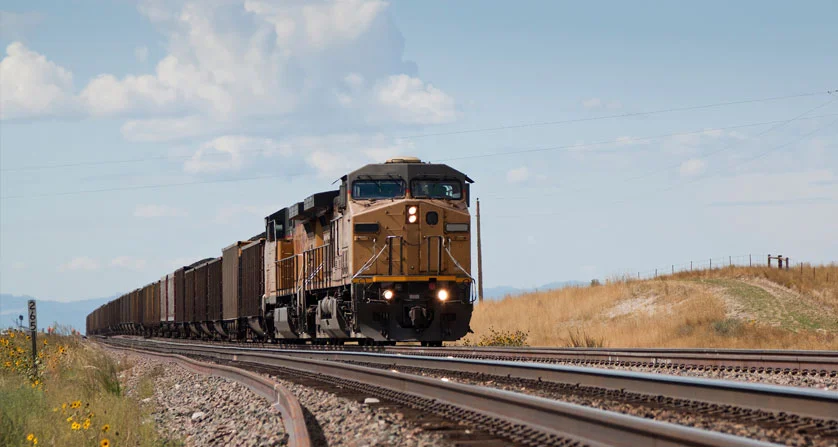
With rail freight, containers are loaded onto suitable rail wagons following port operations and the required formalities, then carried to their destination via the national rail network. Rail enables large numbers of containers to be transported on freight trains, making it an important option for regular movements of imported cargo over long distances.
A key rail-connected inland terminal on the Bandar Abbas–Tehran corridor is APRIN Dry Port, southwest of the capital. Connected to Iran's rail network, the terminal offers services including unloading containers from rail wagons, rail-to-road transfers, container storage, customs formalities, and inland distribution.
The economic advantages of rail freight are generally most evident in high-volume movements, regular shipments, and reduced reliance on road transport capacity.
Combined Rail and Road Transport
Multimodal Transport involves using more than one mode of transport to move cargo. On the Bandar Abbas–Tehran route, a common operating model is to move a container by train from Shahid Rajaee Port to APRIN, then deliver it by truck to the receiving warehouse or factory. This approach combines the advantages of rail freight over the long-distance leg with the flexibility of road transport for final delivery.
Comparing Rail and Road Container Transport from Bandar Abbas to Tehran
Choosing between rail and road container transport from Bandar Abbas to Tehran depends on factors such as the number of containers, delivery location, transport schedule, and additional costs. Each option has distinct characteristics and advantages that should be assessed against the shipment's requirements.
Transport Operations and Delivery Location
With rail transport, containers travel on freight wagons to a rail station or inland terminal, such as APRIN Dry Port. With road transport, container trucks can deliver directly to the designated warehouse, factory, or terminal. Road transport offers greater flexibility for door-to-door delivery and, in many cases, allows the container to reach the consignee directly. Rail shipments, by contrast, usually require an additional road leg from the rail terminal to the final delivery point.
Transport Capacity and Container Volumes
Rail transport is well suited to moving large numbers of containers in consolidated, scheduled shipments. It is particularly worth considering for companies with regular, high-volume cargo flows. Road transport, on the other hand, requires sufficient truck capacity for the number of containers and offers greater flexibility for individual shipments and deliveries to specified locations.
Factors Affecting Transit Time
For rail freight, transit time depends on the train schedule, rail network capacity, and the time required for loading and unloading. For road freight, truck availability, road conditions, traffic, and any movement restrictions or permits affect delivery times. Neither mode is consistently faster in every situation; delivery times should therefore be estimated against the actual shipment and route conditions.
Freight Costs and Additional Services
For rail container transport, the total cost must include not only the main freight charge but also rail and terminal handling costs and, where applicable, onward road transport to the final destination. For road container transport, trucking charges, potential waiting charges, and empty container return costs are important components of the total price.
Which Transport Mode Is More Suitable?
Rail transport is generally more suitable for high-volume shipments, regular cargo movements, and shipments destined for a rail terminal or dry port. Road transport offers greater flexibility for individual containers and direct deliveries to warehouses or factories.
How Long Does Container Transport from Bandar Abbas to Tehran Take?
Two timeframes are important when planning container transport: the actual transit time and the overall delivery lead time from when the container is ready at the port until it is delivered to the consignee. Assuming that all required permits and related formalities have been completed, the approximate transport times from Bandar Abbas to Tehran are as follows:
- Road transit time: Transporting a container by road from Bandar Abbas to Tehran typically takes around two days in transit, although this may vary according to driving conditions, traffic restrictions, and the final destination.
- Rail transit time: Rail transport of a container from Bandar Abbas to APRIN takes approximately 48 hours.
What Can Cause Transport Delays?
Container transport delays are not necessarily caused by slow train or truck movements. For many shipments, waiting time for documentation, exit permits, transport equipment allocation, cargo inspections, or destination delivery arrangements can be more significant. Before confirming a delivery schedule, the transport provider should therefore check the shipment's customs status, container readiness, and receiving facilities at the destination.
Steps in Transporting Containers from Bandar Abbas to Tehran
Moving a container from Shahid Rajaee Port to Tehran involves a sequence of port operations, documentation, customs procedures, and inland transportation. The typical steps are:
- Vessel arrival and container discharge: Following vessel arrival and discharge operations, the container is placed in its designated yard location, and the relevant information is recorded in the terminal systems.
- Document collection and verification: The ocean bill of lading, shipping line delivery order, container details, warehouse receipt, and relevant commercial documents are reviewed.
- Confirmation of customs status: It is determined whether the goods will undergo final import clearance in Bandar Abbas or move to Tehran under an authorised customs procedure.
- Settlement of charges and port exit authorisation: Port, terminal, and shipping line requirements are fulfilled in accordance with contractual terms and operating procedures.
- Transport equipment booking: A suitable truck is assigned or rail wagon capacity is allocated according to the container type, gross weight, and destination.
- Loading and inland transport documentation: The container is loaded onto the transport equipment after verification of its number, seal, and weight, and the necessary waybill and supporting documents are issued.
- Onward transport to Tehran: The shipment is moved to the designated destination by road or rail, with its progress monitored along the route.
- Arrival and delivery at destination: The container is delivered to the customs facility, terminal, warehouse, or factory, with unloading and distribution arranged where required.
- Empty container return: Where the container belongs to a shipping line, the empty unit must be returned to an authorised location in accordance with the contract and the shipping line's instructions.
At every stage, coordination between the cargo owner, freight forwarder, carrier, customs authorities, and terminal operator is essential. Incomplete documents or an unclear delivery location can lead to container delays and additional charges.
Customs Clearance in Bandar Abbas or Tehran: Which Option Is More Suitable?
One important decision for importers is whether to clear the goods at Shahid Rajaee Port or move them under customs control to an authorised inland customs facility.
Final Import Customs Clearance in Bandar Abbas and Inland Transport
Under this option, import formalities and final customs clearance in Bandar Abbas are completed before the goods leave the port. Once exit authorisation has been issued, the cargo can be transported to an inland destination in accordance with applicable regulations. This option is suitable when the necessary documents and permits are ready, customs clearance can be completed at the port, and the cargo owner wants the shipment delivered directly to a warehouse or factory.
Moving Goods to Tehran Under the Domestic Customs Transit Procedure
Under the second option, goods that have not yet been customs-cleared move from Bandar Abbas Customs to another authorised customs office or customs-controlled facility, where the final formalities are completed. Under Article 59 of Iran's Customs Affairs Law, this procedure is known as domestic customs transit and is classified as private or administrative domestic transit, depending on whether it is requested by the applicant or initiated by the customs authority. The law also provides for the issuance of a domestic transit permit for direct transfer under the prescribed conditions.
Moving goods to Tehran does not mean they are automatically customs-cleared at destination. The cargo owner must still provide the required documents, obtain permits, fulfil obligations, and complete the relevant customs formalities. For example, a shipment whose documents specify a customs office in Tehran as the destination may be moved inland once the applicable legal procedures have been completed. Changing the designated customs destination after the goods have arrived, however, may require an application, amended documents, and the relevant approvals.
Domestic Customs Transit vs. International Transit
Under domestic customs transit, goods move between customs offices or authorised customs-controlled facilities within the country. International transit, by contrast, refers to goods entering the country across one border and leaving through another border for a destination in a third country, subject to the applicable customs procedures.
Accordingly, imported goods moved from Bandar Abbas to Tehran for customs clearance or domestic use are not considered international transit cargo merely because the movement is commonly described as inland transit.
The Role of APRIN Dry Port in Container Transport from Bandar Abbas to Tehran
APRIN Dry Port, near Tehran, operates as an integrated logistics hub, connecting rail freight with container handling, customs services, warehousing, and inland distribution. The terminal is connected to Iran's national rail network and can receive imported containers from Shahid Rajaee Port via the Bandar Abbas–Tehran rail corridor.
Unloading Containers from Trains and Onward Road Delivery
When trains arrive at APRIN, containers can be unloaded from rail wagons using terminal handling equipment. Depending on their customs status and delivery instructions, they may be stored in the terminal yard or transferred to trucks for onward transport. This option is particularly suitable for companies with warehouses or factories in Tehran, Eslamshahr, Shahriar, Robat Karim, Karaj, and surrounding areas, as the long-distance leg from Bandar Abbas to the vicinity of the capital is completed by rail.
Warehousing and Customs Clearance Close to the Consumer Market
In addition to rail freight operations, APRIN provides services for full containers, including warehousing, customs formalities, temporary storage, and inland distribution. Where regulatory and operational requirements are met, these facilities allow importers to move goods closer to their target market and schedule final delivery according to production or sales requirements.
Empty Container Depot
APRIN also operates an Empty Container Depot (ECD), offering facilities for the storage, management, and handling of empty containers for shipping lines and logistics providers.
What Types of Containers Are Transported from Bandar Abbas to Tehran?
Container selection should be based on cargo characteristics, dimensions, weight, storage requirements, and the available handling and transport equipment.
| Container Type | Features | Typical Applications |
|---|---|---|
| 20' Standard Dry Container | Smaller internal volume, suitable for relatively heavy cargo | Industrial raw materials, components, and dense cargo |
| 40' Standard Dry Container | Greater internal cargo volume | Packaged goods, equipment, and commercial products |
| 40' High Cube Container (40' HC) | Greater internal height than a standard container | Lightweight, high-volume cargo |
| Refrigerated Container (Reefer) | Equipped with temperature-control systems | Food products and temperature-sensitive cargo |
| Open Top Container | Allows cargo to be loaded from above | Machinery or tall cargo |
| Flat Rack Container | Designed for large or non-standard loads | Out-of-gauge industrial equipment |
Typical internal capacities for 20-foot standard, 40-foot standard, and 40-foot high cube containers are approximately 33.2, 67.7, and 76.4 cubic metres, respectively. Permitted cargo weights vary by equipment type, and road and rail transport weight restrictions must be observed in addition to the container's technical specifications. For refrigerated containers, refrigeration capability alone is not sufficient. Terminal power supply, suitable equipment during transport, temperature monitoring, and delivery arrangements must also be confirmed before shipment.
For heavy or out-of-gauge cargo, suitability for rail wagon or truck transport must be confirmed against the shipment's exact dimensions, centre of gravity, gross weight, and cargo securing requirements.
How Are Container Transport Costs from Bandar Abbas to Tehran Calculated?
There is no fixed freight rate for transporting containers from Bandar Abbas to Tehran. The final charge depends on the container type, cargo weight, mode of transport, delivery location, customs status, available transport capacity, and additional services. For example, moving a 20-foot container from Bandar Abbas to APRIN Dry Port will not cost the same as delivering a 40-foot container directly to a factory in eastern Tehran. To calculate the total cost of container transport, it is necessary to account for charges at every stage of the journey in addition to the main freight charge for movement by train or truck. These include port services, such as container unloading, handling, and terminal operations; documentation and shipping line charges, including the delivery order and container release; and customs processing and inspection fees.
Where rail transport is used, the total must also account for the cost of unloading the container from the wagon, handling and storage at the destination terminal, and onward road transport from the terminal or customs facility to the warehouse or factory. Empty container return costs to the designated authorised location, along with services such as cargo insurance, special securing arrangements, or temperature-controlled transport equipment, may also form part of the total cost, depending on the shipment.
Container Demurrage and Detention
Two important terms when calculating container-related charges are:
- Demurrage: Under common shipping line tariff structures, this is a charge associated with keeping a container at a port or terminal beyond the agreed free time.
- Detention: This charge may apply when a shipping line-owned container is retained outside the terminal beyond the permitted free time.
For container transport from Bandar Abbas to Tehran, the time required to deliver the container to the cargo owner, unload the goods, and return the empty container should be factored into the transport plan from the outset. Delays at any of these stages can offset the savings achieved by choosing a lower-cost transport option.
Key Safety Considerations for Container Transport
When transporting containers from Bandar Abbas to Tehran, attention must be paid not only to the route and transport equipment but also to container condition, the accuracy of weight information, cargo securing, and seal integrity.
Weight Control and Load Distribution
Cargo weight must comply with the permitted capacity of the container, chassis, truck, or rail wagon. Even where the load is below the container's maximum technical capacity, axle-load restrictions on the road or rail loading requirements may prevent it from being transported using the planned equipment. Uneven weight distribution or inadequate cargo securing can also cause damage during braking, cornering, container transfers, or terminal handling.
Checking Container Seals and Identification Details
When a container is handed over or received, its container number and seal number, equipment type, and documented particulars must be checked. For cargo moving under customs control, maintaining seal integrity and complying with the conditions specified in the customs transit permit are legal requirements. Under the implementing regulations of Iran's Customs Affairs Law, delivery within the prescribed period and with an intact seal are among the principal requirements for domestic customs transit.
Inland Cargo Insurance
Insurance coverage should reflect the cargo's value, route, mode of transport, and contractual obligations. The issuance of a waybill or the carrier's liability insurance does not necessarily provide full coverage against every potential cargo loss or damage. Cargo owners should therefore review the policy terms, exclusions, and limits of liability before transport begins.
PTB Group's Container Transport Services from Bandar Abbas to Tehran
PTB Group draws on its transport and logistics infrastructure, including a dedicated port terminal at Shahid Rajaee Port, together with access to APRIN Dry Port, to provide rail freight, road freight, and multimodal transport solutions along the Bandar Abbas–Tehran corridor.
The Group's services include coordinating the movement of import containers, planning rail and road transport, terminal operations, customs services, warehousing, and cargo distribution at destination. The connection between Shahid Rajaee Port and APRIN supports the coordination of container movements from the southern ports to Tehran's industrial and commercial centres.
To identify a suitable transport solution, PTB Group's specialists can assess the shipment specifications, customs status, number of containers, required delivery timeframe, and final destination, then recommend an approach aligned with the transport requirements.
Conclusion
Container transport from Bandar Abbas to Tehran plays an important role in Iran's import supply chain and domestic distribution network. Road, rail, and combined transport each offer distinct operational advantages and limitations. The most suitable option depends on container volumes, cargo weight and characteristics, customs status, destination location, and delivery schedule.
The rail connection between Shahid Rajaee Port and APRIN Dry Port enables containerised shipments to reach industrial and consumer markets near Tehran. Road transport, meanwhile, remains an important option for direct delivery and flexible cargo movements.
Ultimately, the most appropriate transport solution is one that manages total logistics costs, waiting times, customs requirements, and final delivery arrangements as an integrated process.
Your email address will not be published. Required fields are marked *