Shipping Container Types: Sizes, Uses and How to Choose
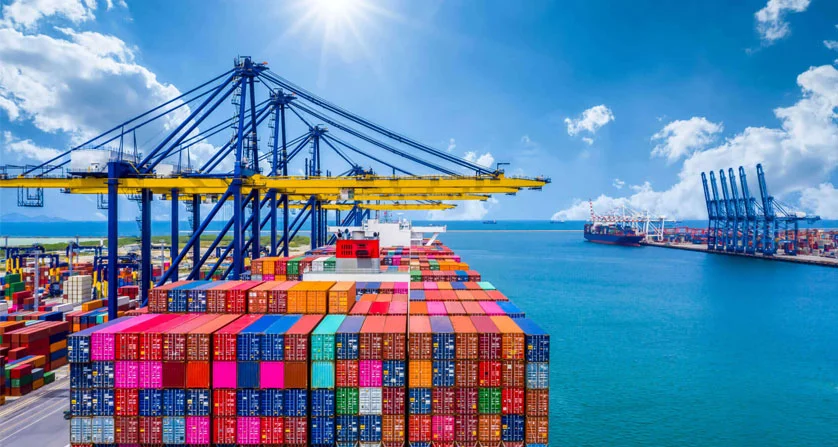
Container selection is a key decision in shipment planning. Cargo type, package weight and dimensions, sensitivity to temperature and humidity, loading requirements and route conditions all influence the choice of equipment. An unsuitable container can lead to inefficient use of capacity, cargo damage, unloading difficulties and higher transport costs.
Understanding container types starts with distinguishing between container dimensions and design and function. For example, 40-foot high cube describes a container’s length and height, while refrigerated (reefer) refers to its temperature-control capability. A container can therefore be a 40-foot high cube reefer.
This article first examines the dimensions of 10-, 20- and 40-foot containers and high cube variants. It then explores the applications of different container types, standards for sea, road and rail transport, and how selecting the right container supports cost control and cargo protection.
Container Types by Size
Container size is usually expressed by its nominal length in feet. Many containers commonly used in international transport have an external width of 2.438 m. Standard-height models typically have an external height of 2.591 m, while high cube containers measure 2.896 m in height, providing approximately 30.5 cm of additional height.
Dimensions of 10-, 20- and 40-Foot Containers and High Cube Variants
The table below provides representative specifications for dry containers. Internal dimensions, door opening dimensions, tare weight and payload capacity vary by manufacturer and model. Dimensions are presented as length × width × height.
| Container Type | External Dimensions (m) | Approximate Internal Dimensions (m) | Approximate Internal Volume |
|---|---|---|---|
| 10-foot, 8 ft 6 in high | 2.991 × 2.438 × 2.591 | 2.84 × 2.35 × 2.39 | Approx. 16 m³ |
| 20-foot standard | 6.058 × 2.438 × 2.591 | 5.90 × 2.35 × 2.39 | Approx. 33 m³ |
| 40-foot standard | 12.192 × 2.438 × 2.591 | 12.03 × 2.35 × 2.39 | Approx. 67–68 m³ |
| 20-foot high cube | 6.058 × 2.438 × 2.896 | 5.90 × 2.35 × 2.70 | Approx. 37.4 m³ |
| 40-foot high cube | 12.192 × 2.438 × 2.896 | 12.03 × 2.35 × 2.70 | Approx. 76 m³ |
Internal volume is not the same as usable cargo space. Package shape, pallet dimensions, stacking restrictions, space needed for cargo securing and, in reefer containers, airflow requirements all affect the space available for loading.
1. 10-Foot Container
A 10-foot container provides compact storage for equipment, tools and goods where space is limited. These units are also used at project sites and in smaller storage facilities. Availability on ocean freight services may differ from that of 20- and 40-foot containers. Before selecting this size for international transport, confirm carrier acceptance, required certifications and handling arrangements.
2. 20-Foot Container
The standard 20-foot container is one of the most widely used options for general cargo. It is suitable for many relatively heavy, compact shipments, such as industrial components and packaged metal products.
For heavy shipments, check concentrated floor loads and weight distribution as well as total cargo weight.
3. 40-Foot Container
The standard 40-foot container offers roughly twice the internal volume of a 20-foot unit and is commonly used for furniture, clothing, household appliances and goods packed in cartons.
Twice the volume does not mean twice the payload capacity. Representative payload figures are approximately 28.1 metric tons for a 20-foot container and 28.8 metric tons for a 40-foot container. These are examples rather than universal limits; the permitted payload depends on the specific unit and the restrictions that apply along the route.
4. 20-Foot High Cube Container
A 20-foot high cube container has the same length and width as a standard 20-foot unit but offers additional height. This makes it useful for taller equipment or packages that require extra vertical space for stowage. Its internal volume is approximately 37.4 m³.
5. 40-Foot High Cube Container
The 40-foot high cube container is used for bulky, relatively lightweight cargo, including furniture, certain household appliances and packaged goods. A representative unit has an internal volume of approximately 76.3 m³, compared with 67.7 m³ for a standard 40-foot container, providing around 13% more space.
Container Types by Design and Application
Containers serve different purposes depending on cargo type, storage requirements and loading method. Some are designed for general cargo, while others accommodate temperature-sensitive goods, liquids, heavy equipment, vehicles or livestock. The following sections outline the main container types, their applications and key features.
1. Dry Container (General Purpose)
A dry container, also known as a general purpose (GP) container, has a fixed roof and walls, with doors at one end. It is the standard choice for many general cargo shipments.
These containers are suitable for goods that do not require temperature control, including clothing, industrial components, furniture, household appliances and many packaged products. Their enclosed structure protects cargo from the elements but does not regulate temperature or eliminate the risk of condensation and moisture.
2. Refrigerated Container (Reefer)
A refrigerated container (reefer) combines thermal insulation with temperature-control equipment. It is used to transport fresh and frozen food, meat and fish, fruit and vegetables, pharmaceuticals and other temperature-sensitive goods.
The temperature range and features such as fresh-air ventilation and controlled-atmosphere capability depend on the equipment model. Many standard reefers operate within a range of approximately −30°C to +30°C, while some models support lower temperatures. Confirm the operating limits and capabilities of the specific unit before booking.
The required shipping temperature, cargo preparation, stowage and airflow arrangements should be established before loading. Power supply on board the vessel, at terminals and during inland transport must also be planned. Reefers are generally designed to maintain cargo temperature, so the goods should be brought to the required shipping temperature before loading.
3. Open Side Container
In addition to end doors, an open side container allows part or all of one or both long sides to be opened. This access is useful for long cargo and industrial equipment, as well as loads that are difficult to handle through the end doors.
Side loading can improve forklift access and make cargo positioning easier. These containers are generally less widely available in shipping line fleets than standard dry containers, so sourcing them requires advance coordination.
4. Open Top Container
An open top container has side and end walls and allows loading from above. The roof opening is typically covered by a tarpaulin supported by removable roof bows. A related design with a removable rigid roof is known as a hard top container.
This design is suited to machinery, heavy components and cargo that requires crane loading. The roof opening may be smaller than the container’s internal dimensions, so the actual loading clearance must be checked. If cargo extends beyond the container’s standard external dimensions, acceptance and pricing for out-of-gauge (OOG) cargo must be confirmed with the carrier.
5. Insulated Container
An insulated container reduces heat transfer between its interior and the outside environment.
Insulation alone does not provide active cooling or heating and cannot guarantee precise temperature control over a long journey. Suitability for temperature-sensitive cargo should be assessed against the cargo’s initial temperature, transit time, ambient conditions and insulation performance.
6. Ventilated Container
A ventilated container allows air exchange through natural or mechanical ventilation, depending on its design. These containers can be suitable for certain agricultural products, such as coffee and cocoa beans, subject to the cargo’s requirements and conditions along the route.
The small vents fitted to some dry containers are not equivalent to a dedicated ventilation system. Ventilated containers are designed for effective air circulation and exchange. However, ventilation does not replace refrigeration and cannot, on its own, guarantee that cargo remains at the required temperature.
Ventilation performance depends on differences in temperature and humidity between the inside and outside of the container. Introducing outside air therefore does not always reduce moisture levels.
7. Heated Container
A heated container protects goods from extreme cold, freezing or temperatures below their permitted range. Some temperature-controlled containers combine cooling and heating in a single unit.
Heating may be required for certain chemicals, resins and liquids that need to remain fluid at a specified temperature. A tank container fitted with a heating system may be suitable for these products.
8. Tank Container
A tank container consists of a tank mounted within an intermodal frame. It is used for bulk liquids and, in specialized designs, gases. The frame allows the unit to be transferred between sea, road and rail transport.
Typical cargoes include edible oils, beverages, chemicals and certain industrial products. Suitability must be assessed for each substance. The tank material, design pressure and temperature, fittings, inspection status and previous cargo history must be compatible with the intended cargo.
Food products require equipment suitable for food use that meets the applicable hygiene requirements. For dangerous goods transport, tank selection and transport requirements must be based on the classification of the specific substance.
9. Flat Rack Container
A flat rack container has a heavy-duty floor and end structures, but no roof or side walls. This configuration is suited to large machinery, project equipment and overwidth or overheight cargo.
Flat racks are available in fixed-end and collapsible-end designs. Only collapsible models have ends that fold down, reducing the space required to store or reposition empty units. The center of gravity, cargo support points, securing arrangements and weight distribution must be carefully assessed.
10. Platform Container
A platform container is a load-bearing platform with no roof, side walls or upright end structures. Some collapsible flat racks can also be used as platforms with their ends folded down, provided their design permits this and the operator approves the arrangement.
Platform containers are suitable for large industrial components and project cargo that cannot fit into standard containers because of their dimensions or shape. Before shipment, check the securing method, weight distribution and load-bearing capacity at each support point. Weather protection must also be planned, and the carrier must approve the overall dimensions of the loaded unit.
11. Containers for Vehicle Transport
Containerized vehicle transport can use standard 20- and 40-foot containers, including high cube variants, fitted with appropriate vehicle securing systems or specialized racks. A purpose-built vehicle transport container is therefore not always necessary.
Vehicle capacity depends on vehicle dimensions and weight, rack design and the clearances needed for safe loading. Capacity must be assessed for each vehicle type and loading arrangement. Once loaded, the container can be transferred between ships, trains and trucks.
Carrier requirements for vehicle acceptance, fuel and batteries must be checked before booking. For electric and hybrid vehicles, battery-related requirements and applicable dangerous goods regulations also need to be reviewed.
12. Livestock Container
Transporting livestock requires specialized equipment and operational planning. The container must be suited to the species and number of animals, journey duration and climatic conditions along the route. Key considerations include effective ventilation even while stationary, adequate space, suitable flooring, access to water and feed, cleaning provisions and waste management.
For ocean freight, the container’s stowage position and ventilation on board the vessel must also be assessed. Adding a few vents to a standard dry container does not make it suitable for livestock transport. Carrier acceptance, veterinary requirements and the regulations of the origin, transit and destination countries must be confirmed before transport arrangements are finalized.
Specifications and Standards for Containers Used in Sea, Road and Rail Transport
The same intermodal container can often be used for sea, road and rail transport. It can be carried on a vessel, a road chassis or a railcar without unloading and reloading its contents. Suitability depends on carrier acceptance, securing arrangements and the restrictions that apply to each transport mode.
What Do Container Markings and Plates Tell You?
Key container markings include the container identification number, size and type code, maximum gross mass, tare weight, payload capacity and internal volume.
- Tare: The weight of the empty container.
- Maximum Gross Mass: The maximum permitted combined weight of the container and its contents.
- Payload: The maximum permitted weight of the contents, including cargo, packaging, pallets, dunnage and securing materials.
- Capacity: The internal volume, usually expressed in cubic meters.
In general, payload capacity = maximum permitted gross mass − container tare weight.
Container Requirements for Ocean Freight
In ocean freight, key considerations include structural integrity, resistance to handling and stacking loads, and safety approval status. Containers covered by the International Convention for Safe Containers (CSC) must carry a CSC Safety Approval Plate and meet the applicable examination requirements. Examination status must be current under either a periodic examination scheme or an Approved Continuous Examination Programme (ACEP).
For packed containers subject to the relevant provisions of the International Convention for the Safety of Life at Sea (SOLAS), the verified gross mass (VGM) must be provided in time for vessel stowage planning and before loading. VGM includes the container, cargo, packaging, pallets, dunnage and securing materials. The net cargo weight stated on the commercial invoice is not a substitute for VGM.
Dangerous goods shipments must also comply with the International Maritime Dangerous Goods (IMDG) Code, including the applicable requirements for classification, packaging, marking, labeling, documentation and segregation of incompatible substances.
Container Requirements for Road Transport
In road transport, the container must be carried on a suitable chassis and secured using compatible devices, such as twistlocks. Check chassis compatibility, the overall height of the loaded vehicle and route clearance restrictions, particularly for high cube containers.
Alongside total weight, weight distribution across the axles is a key consideration. A load may be within the container’s payload capacity but still overload an axle because of how the cargo is distributed. The container’s rated payload must therefore be assessed alongside the weight limits that apply to the road route.
Swap bodies and truck bodies are also used in inland transport, but they should not be assumed to meet the same requirements as containers designed for stacking on board a vessel.
Container Requirements for Rail Freight
In rail freight, the container’s length and type must be compatible with the railcar and its securing points. Railcar capacity, axle loads and weight distribution must also be checked. The loaded railcar must fit within the route’s loading gauge, which limits the permitted height and width of the railcar and its load.
For high cube containers, for example, the container’s height is only one consideration. The height of the railcar deck and clearance through tunnels and under bridges must also be assessed. Cargo securing inside the container must account for the forces and operating conditions associated with rail transport.
Dangerous goods transport is subject to the regulations applicable to the route and transit countries. ADR sets out requirements for the safe transport of dangerous goods by road, while RID covers their transport by rail. These regulations apply in countries that have adopted them.
The Role of the CTU Code in Safe Packing and Securing
The Code of Practice for Packing of Cargo Transport Units (CTU Code) was developed jointly by the International Maritime Organization (IMO), the International Labour Organization (ILO) and the United Nations Economic Commission for Europe (UNECE). It provides guidance on packing, stowing and securing cargo in containers and other cargo transport units for transport by sea, road and rail.
The code is non-mandatory at the international level, although it may be referenced in legal or contractual requirements.
How Can Choosing the Right Container Reduce Transport Costs?
A container’s cost-effectiveness depends on its capabilities, limitations and the total cost of moving the shipment. In addition to freight charges, this can include equipment sourcing, inland transport, loading and securing, power and monitoring, destination handling, and potential costs arising from delays or damage.
Making Effective Use of Capacity
For lightweight, bulky cargo, a high cube container can accommodate more goods, provided the packages can be stacked. For dense, heavy cargo, additional volume may offer little benefit because weight limits can be reached before the available space is filled.
Comparisons should therefore be based on the actual number of packages and pallets that can be loaded. Additional space only adds value if it can be used, and freight rates do not necessarily change in proportion to the extra volume.
Simplifying Loading and Unloading
For cargo that cannot pass through the end doors, an open top or open side container can help avoid unnecessary dismantling, repacking or operational interruptions. These savings should be weighed against the cost of sourcing a specialized container, crane operations and, where applicable, out-of-gauge transport.
Preventing Cargo Deterioration and Damage
Selecting a reefer container for cargo that requires temperature control, or equipment suited to moisture-sensitive products, can reduce the risk of quality deterioration and rejection at destination. Cargo value and the consequences of damage should be considered alongside freight charges. Lower equipment costs alone do not make a shipment more cost-effective.
Reducing Delay Costs and Schedule Disruption
Coordinating container availability, confirming dimensions and weight, preparing documents and checking unloading facilities at destination can reduce the risk of delays. Review the applicable contract terms and free-time allowances for potential waiting charges, storage fees, demurrage and detention.
Maintaining Continuity Across Sea, Road and Rail Transport
A container suitable for every stage of the route can move between ship, truck and train without unloading and reloading the cargo. This reduces additional handling and the risk of cargo damage at transfer points, while supporting more reliable delivery planning.
How Container Selection Supports Cargo Safety and Security
Cargo protection depends on container condition, appropriate packaging and effective cargo securing. Before loading, inspect the roof, walls, floor, doors and door seals for damage, signs of water ingress, contamination and unusual odors. Container cleanliness and previous cargo history are particularly important for sensitive goods.
Moisture can still build up inside a structurally sound container. Moisture in cargo and pallets, residual water after cleaning and temperature changes during transit can cause condensation. Moisture control should address initial moisture levels, packaging and the appropriate use of desiccants or ventilation, based on the cargo and transport conditions.
For cargo security, record the container and seal numbers, verify them against the shipping documents at handover and document the cargo’s condition and securing arrangements at loading. Seals can help detect unauthorized access.
What Information Should You Prepare Before Choosing a Container?
To help your logistics provider recommend suitable equipment and prepare an accurate transport proposal, provide the following information:
- Cargo details: The type and value of the goods and any sensitivity to damage or environmental conditions.
- Packed dimensions and gross weight: The actual dimensions and gross weight of each package or pallet as prepared for shipment.
- Stowage requirements: Stackability, center of gravity and any restrictions on where specialized cargo can be supported.
- Environmental requirements: Required shipping temperature, ventilation needs and humidity limits.
- Route and schedule: Origin, destination, planned shipment dates, transfer points and transport modes.
- Loading and unloading facilities: Access to forklifts, cranes, loading docks and power supplies.
- Special requirements: Details of dangerous goods, vehicles, livestock or other specialized cargo.
Conclusion: Choosing the Right Container for Your Cargo
Understanding container types, from 10-, 20- and 40-foot sizes to reefers, open tops, flat racks and tank containers, is the starting point for selecting suitable equipment. The final choice should take account of cargo dimensions, weight, storage requirements, loading methods and restrictions along the entire route.
To plan your shipment, share your cargo specifications, origin, destination and preferred schedule with PTB Group’s logistics specialists. The team can assess suitable transport options, container requirements and operational arrangements before booking and loading. Early coordination helps improve cost estimates and reduce avoidable transport risks.
Your email address will not be published. Required fields are marked *