FCL vs LCL: Which Shipping Method Is Better for Import?
In international logistics, selecting the right shipping model has a direct impact on transportation costs, delivery schedules, cargo safety, and supply chain efficiency. Two of the most common container shipping methods are FCL (Full Container Load) and LCL (Less than Container Load). Understanding the difference between them is essential for importers, manufacturers, and trading companies.
When shipping cargo from China, Europe, or regional markets into Iran, businesses often ask whether reserving a full container is more cost-effective than using shared container space. The answer depends on cargo volume, shipment urgency, destination, and operational priorities.
What Is FCL?
FCL stands for Full Container Load. In this method, one shipper reserves an entire container exclusively for a single shipment. Even if the container is not fully loaded, the full unit remains dedicated to one customer.
This option is commonly used for:
- Industrial cargo
- Raw materials
- Project cargo
- Machinery
- Large-volume shipments
- High-value goods
Advantages of FCL
- Higher security
- Faster transit
- Reduced cargo handling
- Lower damage risk
- Better control over shipment
- Cost-effective for high-volume cargo
What Is LCL?
LCL means Less than Container Load. This method allows several shippers to share space inside one container. Each customer pays only for the volume occupied by their cargo.
LCL is ideal for:
- Small shipments
- Sample orders
- Test imports
- Low-volume cargo
- Flexible distribution needs
Advantages of LCL
- Lower initial shipping cost
- Suitable for smaller cargo
- Flexible shipment planning
- No need to wait for full load
- Ideal for SMEs and startups
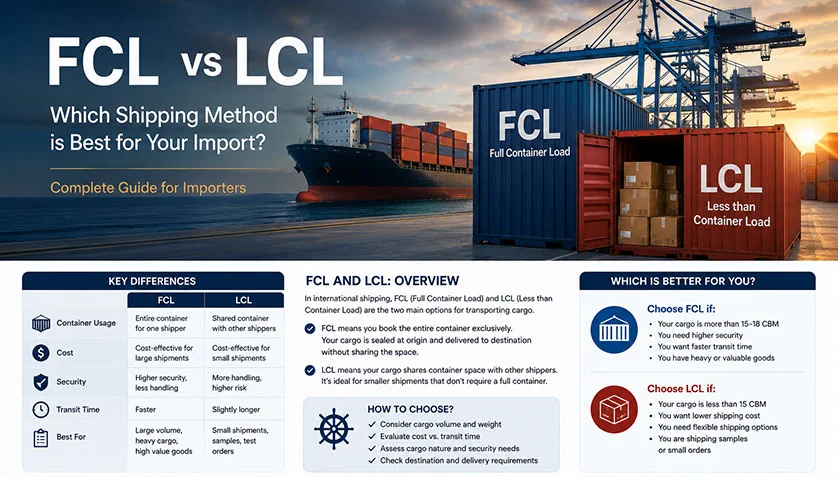
FCL vs LCL: Main Differences
| Criteria | FCL | LCL |
|---|---|---|
| Container Use | Exclusive | Shared |
| Transit Time | Shorter | Longer |
| Security | Higher | Moderate |
| Handling | Less | More |
| Best For | Large shipments | Small shipments |
When Is FCL Better?
FCL becomes more economical when shipment volume exceeds approximately 15–18 CBM.
It is often preferred when:
- Shipment volume is high
- Cargo requires higher security
- Delivery time is critical
- Goods are sensitive or valuable
Example
Suppose cargo volume is 22 CBM.
LCL rate = USD 70 per CBM
Total LCL cost:
22 × 70 = USD 1,540
If a 20ft FCL container costs USD 1,350, then FCL becomes the better option.
When Is LCL Better?
LCL is more suitable when shipment volume is small.
Example
Cargo volume = 5 CBM
LCL rate = USD 65
Total:
5 × 65 = USD 325
In this case, reserving a full container would be significantly more expensive.
CBM and Shipment Selection
The choice between FCL and LCL largely depends on cargo volume, measured in CBM (Cubic Meter).
General guideline:
- Under 15 CBM → LCL
- Above 15–18 CBM → FCL
However, cost comparison should always include customs handling, terminal fees, and inland distribution.
FCL and LCL in Rail Transport
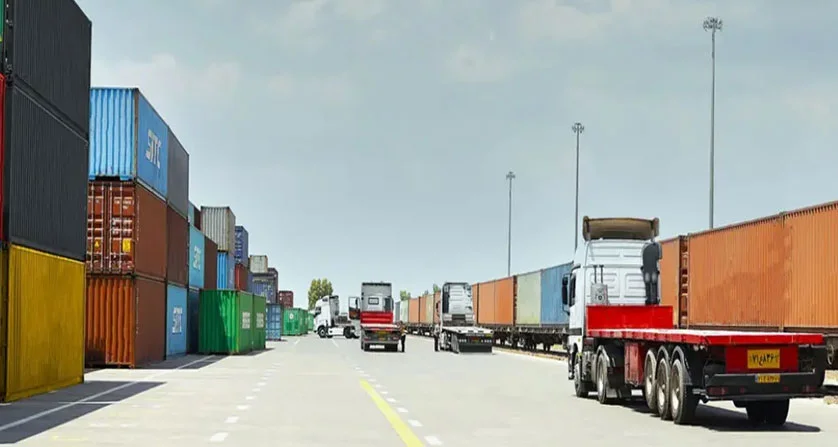
On rail corridors such as China–Iran, both FCL and LCL services are increasingly used. Rail transport offers a reliable alternative to maritime shipping, especially for time-sensitive industrial imports.
Cargo entering Iran by rail often reaches Aprin Dry Port, where unloading, customs clearance, warehousing, and domestic distribution are handled.
The Role of Aprin Dry Port
Aprin Dry Port is one of Iran’s strategic logistics hubs, located near Tehran and connected to both east-west and north-south transport corridors.
For FCL shipments, it enables:
- Direct container unloading
- Fast customs processing
- Reduced inland delay
- Efficient final delivery
For LCL shipments, it supports cargo deconsolidation and distribution.
How PTB Group Supports FCL and LCL Shipments
PTB Group provides integrated shipping solutions through its access to Aprin Dry Port and key port terminals.
Services include:
- Container booking
- International freight
- Customs clearance
- Warehousing
- Domestic transportation
- Final delivery
By evaluating shipment size, destination, and timing, PTB helps businesses select the most efficient transport model.
Conclusion
There is no universal answer to whether FCL or LCL is better. The correct choice depends on shipment volume, cost structure, cargo type, and delivery urgency.
For larger industrial shipments, FCL often provides better efficiency, lower handling risk, and improved control. For smaller cargo volumes, LCL offers flexibility and lower upfront cost.
With PTB Group’s integrated logistics services and operational infrastructure at Aprin Dry Port and its dedicated Sea Port Terminal at Shahid Rajaee Port in Bandar Abbas, cargo owners can choose the most suitable transportation solution for both import operations and domestic distribution across Iran.
Your email address will not be published. Required fields are marked *