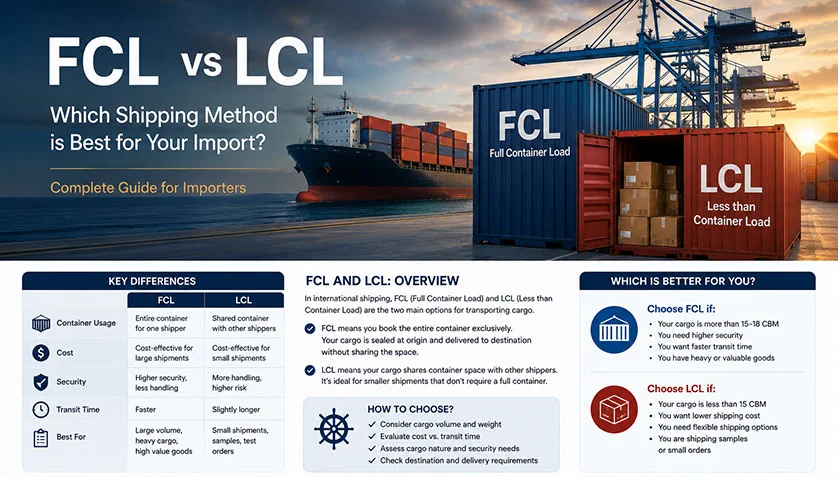
What Is CBM? Complete Guide to Cargo Volume Calculation and Shipping Costs
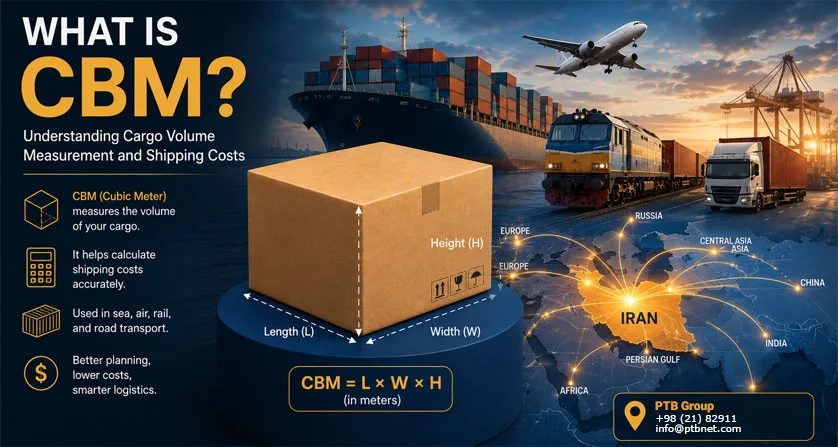
In logistics, Freight Forwarding, and international trade, CBM (Cubic Meter) is one of the most important units used to calculate cargo volume and shipping costs. Whether moving goods by sea, rail, road, or air, CBM helps determine how much physical space a shipment occupies inside a container, truck, rail wagon, or aircraft.
For importers, exporters, and supply chain operators, understanding CBM calculation is essential for estimating transportation costs, selecting the most efficient shipping method, and optimizing cargo planning. Within the integrated logistics services of PTB Group, CBM calculation plays a key role in domestic and international freight operations.
What Does CBM Mean?
CBM stands for Cubic Meter, the standard unit used to measure cargo volume. It indicates the total space occupied by a shipment.
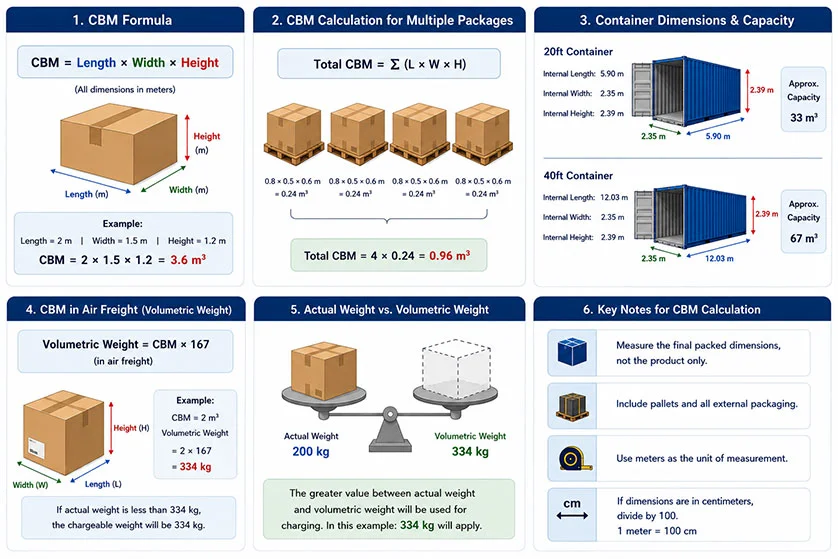
The basic formula is:
CBM = Length × Width × Height
All dimensions must be measured in meters.
Practical Example
Suppose a pallet has the following dimensions:
- Length: 2 meters
- Width: 1.5 meters
- Height: 1.2 meters
Calculation:
2 × 1.5 × 1.2 = 3.6 CBM
This means the shipment occupies 3.6 cubic meters.
Why CBM Matters in Freight Transportation
Shipping charges are not always based solely on actual weight. In many cases, freight providers calculate costs based on cargo volume, especially when the shipment occupies significant space.
This is particularly important in:
- LCL sea freight
- Rail container transport
- Air cargo
- International transit
- Multimodal logistics
How to Calculate CBM for Multiple Packages
When a shipment includes multiple cartons or pallets, the CBM of each package should be calculated separately and then added together.
Formula:
Total CBM = Sum of (Length × Width × Height)
Example
4 cartons, each with dimensions:
- Length: 0.8 m
- Width: 0.5 m
- Height: 0.6 m
Volume of one carton:
0.8 × 0.5 × 0.6 = 0.24 CBM
Total volume:
4 × 0.24 = 0.96 CBM
CBM in Sea Freight
In Ocean Freight, especially LCL shipments, cargo costs are often calculated based on CBM.
Shipping Cost Example
Rate:
USD 65 per CBM
Cargo volume:
8.5 CBM
Total cost:
8.5 × 65 = USD 552.50
Approximate freight cost: USD 553
CBM in Air Freight
Air cargo usually uses volumetric weight as the basis for charging.
Formula:
Volumetric Weight = CBM × 167
Example
Cargo volume:
2.8 CBM
Calculation:
2.8 × 167 = 467.6 kg
If the actual cargo weight is 320 kg, the airline will charge based on 467.6 kg.
CBM in Rail and Road Transport
In rail logistics, especially on strategic routes such as China–Iran rail transport, CBM is essential for container planning, wagon allocation, and inland distribution through Aprin Dry Port.
Within PTB Group logistics operations, CBM is used to determine the best transport mode including:
- FCL shipping
- LCL shipping
- Rail freight
- Road transport
- Multimodal transport
Container Capacity in CBM
| Container Type | Approximate Capacity |
|---|---|
| 20ft Container | 33 CBM |
| 40ft Container | 67 CBM |
| 40ft High Cube | 76 CBM |
Freight Cost Formula
Freight Cost = CBM × Shipping Rate
Real Example
Cargo volume:
14.2 CBM
Rate:
USD 72
Calculation:
14.2 × 72 = USD 1,022.40
Estimated shipping cost: USD 1,022
Important Tips for CBM Calculation
- Measure the final packed dimensions, not only the product
- Include pallets and external packaging
- Use meters as the measurement unit
- If dimensions are in centimeters, divide by 100
Conversion Example
120 cm = 1.2 m
80 cm = 0.8 m
Conclusion
CBM is one of the most important indicators for calculating freight volume and shipping costs in logistics. It helps businesses estimate required space, select suitable transport methods, and optimize freight planning.
Within domestic, international, and multimodal logistics services offered by PTB Group, accurate CBM calculation supports better freight management, transparent pricing, and more efficient supply chain planning.
Your email address will not be published. Required fields are marked *