Container Shipping from China to Iran via Rail; A Fast, Stable, and Reliable Solution in Today’s Supply Chain
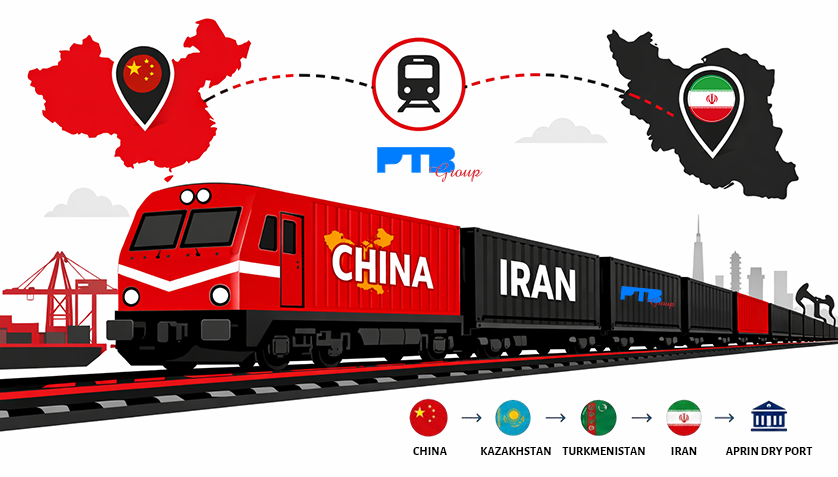
In recent months and years, shifting geopolitical conditions, maritime restrictions, fluctuations in traditional shipping routes, and an overall increase in regional risks have driven importers to seek more reliable and alternative solutions for imports from China. In this context, containerized rail transport from China to Iran using FCL (Full Container Load) has emerged as one of the most strategic options in international trade.
FCL refers to the exclusive use of a full container by a single shipper. This model is widely used in industrial trade, project cargo, and medium to high-volume shipments. When combined with the rail infrastructure between China and Iran, it creates a highly reliable, fast, and secure logistics corridor for Iranian importers.
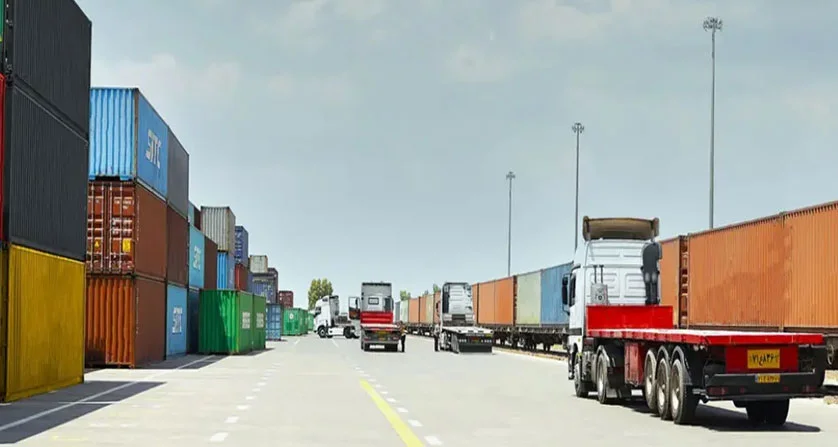
The active China–Iran rail corridor has been strengthened in recent years through cooperation between the railway networks of China, Kazakhstan, Turkmenistan, and Iran. Today, it is regularly connected to the Aprin Dry Port near Tehran, becoming one of the key overland Eurasian trade routes linking East and West.
How Does the Rail Route from China to Iran Work?
Rail container shipping from China typically starts in major industrial and logistics hubs such as
After loading into 20-foot or 40-foot containers, cargo passes through western border crossings such as
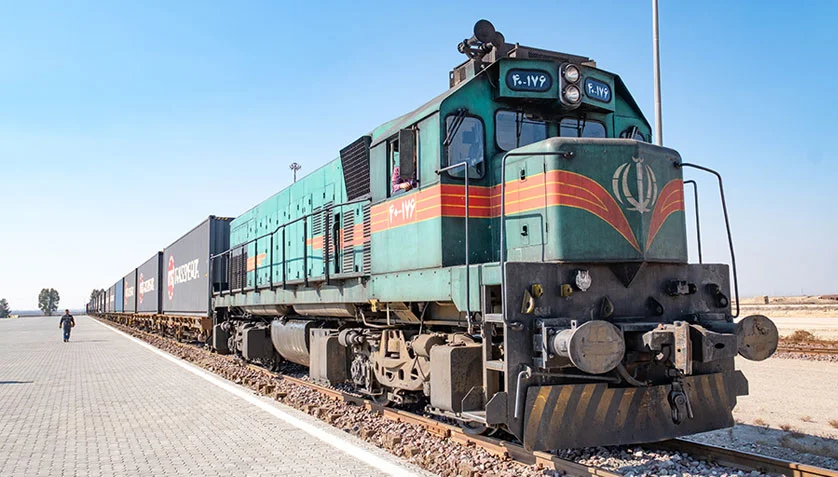
From there, the cargo enters Iran’s national rail network and is transported to the
In summary, the route is:
China → Khorgos → Kazakhstan → Turkmenistan → Iran (Sarakhs) → Aprin Dry Port → Final destinations in Iran
Why FCL Rail Transport from China Is the Best Option Today
In the current global trade environment, traditional maritime routes face challenges such as geopolitical risks, vessel delays, rising insurance costs, restrictions in shipping lines, and changing security conditions. These factors have significantly increased the attractiveness of rail freight from China to Iran.
Reduced Transit Time
While sea freight typically takes 30 to 45 days, rail container transport reduces this time to approximately 15 to 20 days. This is a critical advantage for manufacturing industries, raw material supply chains, and businesses requiring fast replenishment.
Higher Stability and Security
Rail transport offers a land-based, direct corridor that is less dependent on port congestion and maritime disruptions. As a result, it is considered one of the most reliable shipping methods from China to Iran.
Suitable for Bulk and Industrial Cargo
Industrial goods, raw materials, project cargo, machinery, and high-value shipments are particularly well-suited for FCL rail transport due to its stability and container integrity.
The Role of Aprin Dry Port in China–Iran Rail Logistics
The
- East–West Corridor
- North–South International Transport Corridor (INSTC)
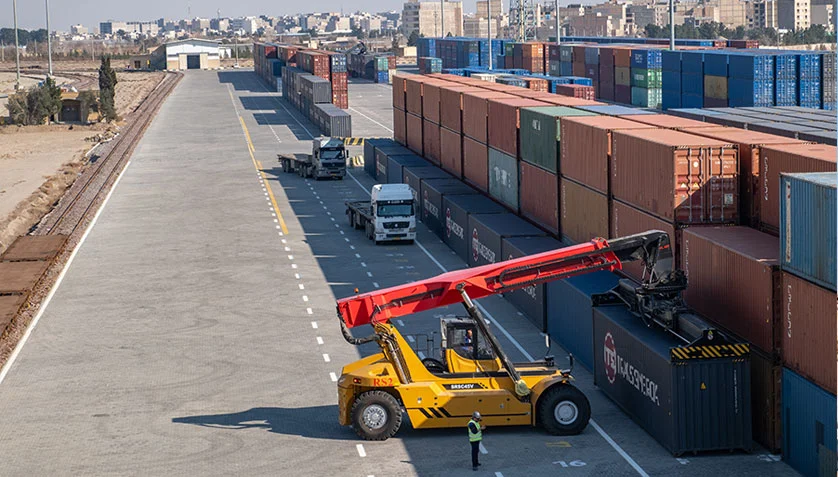
This strategic location makes Aprin the primary hub for unloading and distributing rail cargo arriving from China.
Key advantages of Aprin Dry Port include:
- Direct rail-to-yard container unloading
- Lower port storage and handling costs
- Faster customs clearance procedures
- Direct rail and road connectivity
- Efficient nationwide distribution
PTB Advantage in FCL Container Shipping from China
End-to-End Supply Chain Management
PTB provides full logistics coverage from origin in China to final destination in Iran:
- Container and wagon booking in China
- International rail freight transport
- Customs clearance
- Unloading at Aprin Dry Port
- Warehousing
- Domestic distribution
- Final delivery
Cost and Risk Optimization
With PTB’s operational presence at Aprin Dry Port, cargo handling, clearance, and distribution are fully coordinated. This reduces hidden costs related to delays, demurrage, and inefficient transshipment.
Integration of Aprin with Bandar Abbas and the North–South Corridor
One of the most important advantages of this logistics network is the direct rail connection between
This connectivity enables goods arriving from China to:
- Be distributed across Tehran and central Iran
- Be transported to industrial zones
- Be re-exported via Bandar Abbas
- Be integrated into the North–South Corridor (INSTC)
This creates significant value for companies seeking multimodal logistics and regional transit solutions.
Why This Route Is Now the Most Reliable Option
Recent developments in global trade have shown that over-reliance on maritime shipping can disrupt supply chains. In contrast, the China–Iran rail corridor offers a more resilient alternative due to its land-based route, faster transit time, higher security, and direct connection to Iran’s inland logistics infrastructure.
Key advantages include:
- Shorter transit time
- Higher security and stability
- Reduced dependence on southern ports
- Faster inland distribution
- Direct access to Aprin Dry Port
Conclusion
FCL container rail transport from China to Iran is currently one of the most efficient and strategic import solutions for traders, manufacturers, and logistics companies. It offers not only speed and security but also improved supply chain control.
By leveraging the infrastructure of
Your email address will not be published. Required fields are marked *